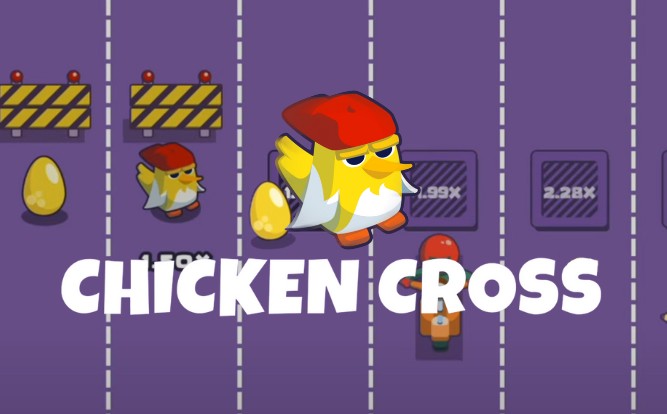
Chicken Road is a single-player casino game that integrates a straightforward grid design with a distinctive gamble option, permitting players to decide whether to secure a payout or risk it for a higher reward. The title is notable because its core loop is not confined to spinning reels; it also contains a individual risk step that can be initiated after any winning combination. This article explores the mechanics that underpin the gamble feature, the mathematics that govern its value, and the hands-on steps a player can take to decide when to take or decline the offered multiplier. By centering on checkable parameters such as RTP, volatility, and bet range, the discussion presents a structure for evaluating whether the gamble option enhances or erodes long-term return.
How the Gamble Mechanism Operates Step by Step
After any credit award from a line win or free-spin payout, the game presents a prompt presenting the choice to take or gamble. Picking gamble triggers a mini-game in which five closed cards appear face down; one card is an ace while the remaining four are lower ranks. The player has to choose a single card. If the ace is uncovered the payout increases twofold and the option to gamble again is offered. A wrong choice surrenders the entire amount and sends back the player to the reels. The probability of success on any single gamble is a precise twenty percent, yet the game displays an on-screen counter that tracks consecutive successful gambles within the same round. As the counter resets after a loss or after the player collects, the statistical expectation of repeated gambles is calculable in advance: the break-even point occurs after three consecutive wins, at which stage the probability-weighted return equals the original payout.
Learning the Grid Structure and Paylines
Chicken Road utilizes a five-reel, three-row layout with a fixed set of twenty-five paylines that run left to right. Each line evaluates symbols only on adjacent reels, and a win is registered when three or more matching symbols appear on any active line. The paytable shows low-value symbols as stylised card ranks from nine through ace, while premium symbols portray farmyard chickens in various poses. Because the paylines are fixed, the player cannot reduce or raise the number of active lines; every spin consequently evaluates the same twenty-five routes. This structure keeps the evaluation obvious: after the reels stop, the game immediately illuminates every winning line and presents the corresponding credit amount before offering the gamble prompt. Players who choose to study line geometry can pause the autoplay function and examine each highlighted path, confirming that only consecutive left-to-right matches add to the total.
Core Extra Functions: Wild Symbols, Scatters and Free Spins
A set of special symbols alter the basic game. The joker replaces any normal winning symbol excluding the scatter and shows up on game reels two, three and four alone. When two wilds hit on the same winning line they increase the line payout before the risk prompt appears. The bonus symbol, depicted as a gold-colored egg, triggers a total of eight bonus rounds when 3 or more land any place on the grid. During the bonus rounds an extra multiplier trail starts at 1x and increases by 1x after each complimentary round win, resetting solely when the bonus concludes. explore A second retrigger symbol group awards 4 additional spins with no resetting the multiplied trail. Because free spins are conducted at the identical bet as the triggering spin, the feature offers a immediate rise in expected value that is separate from the risk decision taken after each payline success.
Wager Limits, Coin Values and Max Exposure
Stake selection starts at at least £0.25 per game round and rises across twenty-five increments to up to £25.00. Every level multiplies by the active coin size, Chicken Road new account, which varies from £0.01 to £1.00, using the fixed twenty-five paylines. The peak theoretical liability in one spin is accordingly £25.00, while the largest advertised line payout is 500 multiplied by the stake. Since the gamble option can reddit.com boost this figure by up to five, the top credit payout on any single round equals 2,500 times the wager. Casinos must still implement regional wager caps; within the UK the highest bet per round on any slot is capped at £2.00 for players under twenty-five and £5.00 for players aged twenty-five and over. Chicken Road automatically adjusts its maximum threshold to remain compliant with these regulatory limits.
Return to Player and Volatility and Theoretical Return
The published return-to-player value for Chicken Road reaches 96.2 percent when the gamble feature is never activated. This figure indicates the long-run average across millions of spins and presupposes optimal use of all base-game features. Volatility is considered medium-high, indicating win frequency falls between one hit in three spins and one hit in four spins, yet the layout of payout sizes is weighted toward occasional larger line wins. When the gamble option is used, the effective RTP can shift because the risk step carries a house edge that is independent of the base game. Operators therefore display two separate RTP values: one for standard play and another that accounts for average gamble behaviour. Players who plan to accept the gamble regularly should review both figures on the information screen before committing larger stakes.
Strategic Decision Framework for the Gamble Option
Players can treat the gamble decision as a separate betting opportunity whose expected value is negative. The expected value of a single gamble round is 0.2 × 2 + 0.8 × 0 = 0.4, implying that forty percent of the wagered sum is returned on average. This figure remains constant regardless of stake size or previous outcomes. As a result, the sensible tactic for a player seeking long-term returns is to reject the gamble every instance. Nevertheless, some players take the bet when the present payout is tiny compared to their session bankroll, since the absolute loss is restricted and the fun factor of the risk step may surpass the negative expectation. A pragmatic approach is to define a personal boundary—like accepting the bet only when the offered amount is less than two percent of the current balance—and to document every decision in a session log so that actual results can be measured against the theoretical expectation.
Session Management and Player Protection Options
Chicken Road integrates the standard suite of player protection measures mandated by the United Kingdom Gambling Commission. Deposit and single-spin limits are adjustable from the account menu and remain fixed until the specified timeframe expires. Reality-check reminders appear every thirty minutes by standard and may be reduced to five-minute intervals. When a limit is reached the game locks further play and sends the player to the account summary page. Session history lists every spin result, including whether the gamble option was taken and the outcome of each card draw. Reviewing this data after a session enables a player to confirm that the recorded hit frequency matches the published 96.2 percent RTP and to modify subsequent stake or gamble behaviour accordingly. Because the game keeps only the last hundred rounds, regular export of the CSV report is suggested for long-term tracking.
Chicken Road’s gamble feature therefore acts as an optional side bet whose theoretical value is lower than the base game. Players who prioritise mathematical return will consistently collect after each win, while those who like the risk step can apply strict thresholds and session limits to maintain risk within defined borders. Checking the in-game information screen for the current RTP data and confirming that stake limits match current UK regulations remains the most reliable way to ensure that any adopted plan stays consistent with both personal goals and regulatory requirements.
Leave a Reply